
How to Protect Your Driveway from Roll Off Dumpster Scratches
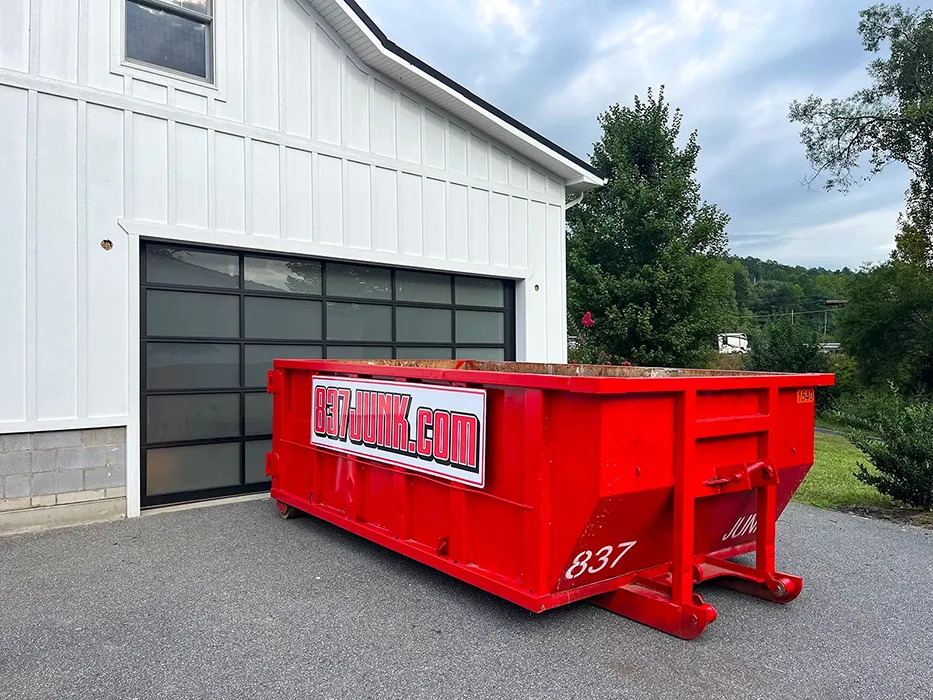
If you're planning a home renovation, cleanout, or construction project, knowing how to protect your driveway from roll off dumpster scratches could save you a serious headache and a lot of money. A loaded roll-off dumpster can reach up to 20,000 lbs (10 tons), which is the legal maximum for most haul trucks, and all of that weight pressing down through metal wheels onto your concrete or asphalt is a recipe for gouges, scrapes, and cracks you didn't budget for.
Key Takeaways
Question |
Quick Answer |
|---|---|
What causes dumpster scratches on driveways? |
Metal wheels on the bottom of roll-off containers drag across concrete or asphalt during delivery and pickup. |
What is the best way to protect your driveway from roll off dumpster scratches? |
Place two sheets of 3/4-inch plywood under the dumpster, one at the back door and one at the front, before the container is lowered. |
How many plywood sheets do I need? |
Two standard 4x8 sheets, one for each end of the dumpster where it contacts the ground. |
Does this work on both concrete and asphalt driveways? |
Yes, plywood protection works on both surfaces. Asphalt is especially vulnerable in warm weather and benefits even more from this method. |
Can I reuse the plywood for future dumpster rentals? |
Plywood typically degrades after 2 to 3 uses due to moisture and splintering, so plan to replace it for each major project. |
Should I tell my dumpster rental company about driveway protection? |
Yes, always communicate placement preferences with your rental company before delivery day so the driver knows exactly where to set it down. |
Where can I rent a roll-off dumpster in Western NC and North Georgia? |
837JUNK serves Murphy NC, Hayesville NC, Blairsville GA, Blue Ridge GA, and surrounding areas with same-day and next-day delivery. |
Why Roll Off Dumpsters Can Scratch and Damage Your Driveway
Roll-off dumpsters don't arrive at your property on a flatbed and gently set down by hand. They're loaded onto specialized trucks and unloaded using a hydraulic system that tilts the truck bed, letting the container slide backward on metal wheels or rollers that make contact with the ground as it comes off.
Those metal wheels roll directly on your driveway surface. And when you add the weight of the steel container itself, even before you put a single piece of debris inside, you're already dealing with thousands of pounds pressing down on a narrow contact point.
Here's where the real damage happens:
The wheels don't roll perfectly smoothly. Any slight angle, uneven pavement, or debris under the wheel creates a dragging, gouging motion.
The door end hits first. The back of the dumpster, where the swing-out door is located, is the first part to touch the ground, and it bears most of the initial impact load.
The hydraulic lift lowers the front at an angle. As the truck tilts back up, the front of the container drops down, sometimes unevenly, which can scrape across the surface.
Pickup is just as risky as delivery. When the truck hooks up and pulls the dumpster back on, the metal wheels drag and roll across your driveway again.
Concrete and asphalt look tough, but they weren't designed to absorb that kind of contact stress from hard steel edges moving at an angle. The result? Scratches, gouges, and in some cases, chunks of material that get pulled clean out of the surface.


How to Protect Your Driveway from Roll Off Dumpster Scratches Using Plywood
The most practical and widely used method to protect your driveway from roll off dumpster scratches is placing sheets of plywood on the surface before the dumpster is set down. It's simple, affordable, and genuinely effective.
Here's exactly how it works, step by step:
Place the first plywood sheet at the drop zone for the back of the dumpster. This is the end where the door swings open. Position the sheet so it covers the area where the metal wheels will first make contact with your driveway. This takes the initial impact off your concrete or asphalt entirely.
Slide the second plywood sheet toward the front. As the hydraulic lift on the truck lowers the front of the container down, slide the second sheet into position under the front end. You're essentially giving the dumpster a wooden landing pad at both contact points.
Make sure both sheets are flat and stable before the driver proceeds. A sheet that shifts or folds during placement won't protect anything. Communicate with the driver so they can pause the lowering process while you get the second sheet in place.
That's the whole method. Two sheets, two positions, and your driveway is protected from both the door end and the front end contact points. When the dumpster is picked up, the same plywood sheets work in reverse, sitting under the container as it's lifted back onto the truck.
Did You Know?
Standard residential concrete driveways are typically designed to support only 4,000 to 6,000 lbs, yet a loaded roll-off dumpster can weigh up to 20,000 lbs.
Source: acehardware.com
Choosing the Right Plywood for Driveway Protection
Not all plywood is the same, and picking the wrong type means it could split, bow, or fail entirely under the weight of the dumpster. Here's what to look for when you're shopping for protective sheets.
Thickness
3/4-inch plywood is the standard recommendation for dumpster driveway protection. Anything thinner is likely to crack or compress under the load. Thicker sheets (1 inch or more) offer more cushion but are heavier to move around and more expensive.
Type
Pressure-treated plywood is the best option if your driveway is outdoors (which it always is). Regular untreated plywood will absorb moisture and begin to delaminate quickly, especially if the dumpster sits for several days. Pressure-treated sheets currently retail for around $55 to $65 each, which is a small investment compared to driveway repair bills.
Size
Standard 4x8 sheets work well for most residential roll-off containers. For larger 30-yard or 40-yard construction dumpsters, you may want to consider wider coverage or additional sheets to account for the longer footprint of the container.
Condition
Don't use warped, cracked, or previously damaged plywood. A sheet that isn't flat will rock under the weight, which can actually make the dumpster shift unexpectedly during placement. Always start with flat, intact sheets.
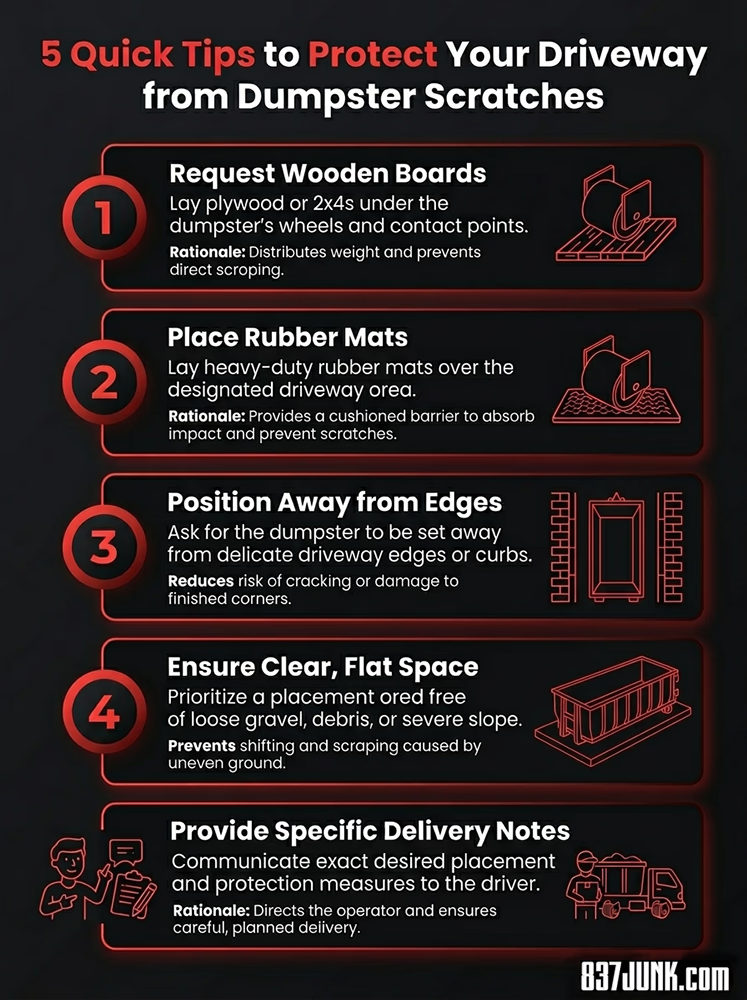
Five practical tips to prevent driveway scratches when roll-off dumpsters are parked at your property. Simple, affordable measures you can implement today.
How to Protect Your Driveway from Roll Off Dumpster Scratches on Both Concrete and Asphalt
The plywood method works on both concrete and asphalt, but each surface has its own vulnerabilities, and it's worth knowing the difference so you can plan accordingly.
Concrete Driveways
Concrete is rigid and strong in compression, but it's brittle under concentrated point loads. A metal wheel catching the edge of a crack or expansion joint can snap a section clean off. Scratches on concrete are also harder to repair invisibly because patching compounds often don't match the original color perfectly.
With concrete, the biggest risks are:
Surface scratches from the metal wheel edges
Gouges at expansion joints or existing cracks
Spalling (surface flaking) from repeated heavy contact
Asphalt Driveways
Asphalt is softer and more flexible than concrete, which actually makes it more vulnerable to dumpster damage in warm weather. On a hot summer day, asphalt can soften enough that metal wheels sink in and leave permanent impressions, not just surface scratches.
In 2026, many homeowners in warmer climates are learning this the hard way. With asphalt, add the plywood protection and also try to schedule your dumpster delivery and pickup for cooler times of day when the surface is firmer.

Step-by-Step Checklist: Driveway Protection Before Dumpster Delivery
Getting organized before the delivery truck arrives makes everything go smoother. Here's a quick checklist to run through the day before or the morning of your scheduled drop-off.
Identify the exact placement spot on your driveway and measure the area so you know how many sheets you need.
Purchase your plywood sheets ahead of time. Two 4x8 sheets of 3/4-inch pressure-treated plywood is the standard starting point for most residential dumpsters.
Clear the driveway of loose debris before the sheets go down. Rocks or gravel trapped under plywood can still cause localized pressure points.
Pre-position your first sheet at the back landing zone (the door end of the dumpster) before the truck pulls in.
Have your second sheet within arm's reach so you can slide it into the front position as the hydraulic lift lowers the container.
Confirm the plan with the driver before they begin unloading. Let them know you'll be placing a second sheet during the process and ask them to pause if needed.
Check both sheets after placement to make sure they're lying flat and the dumpster is fully resting on them, not partially on bare driveway.
If you're working with a residential roll-off dumpster rental for a home cleanout or renovation, this five-minute prep routine is absolutely worth it.
How Plywood Protects Your Driveway from More Than Just Scratches
Plywood does more than just prevent surface scratches. It also acts as a buffer against a few other types of damage that homeowners don't always think about until it's too late.
Hydraulic Fluid and Oil Stains
Roll-off trucks run complex hydraulic systems that lift and tilt heavy containers. Hydraulic fluid leaks are not uncommon, and a drip or spill during delivery can leave a stubborn stain on your concrete or asphalt that's very difficult to remove. A sheet of plywood sitting under the delivery zone catches those drips before they reach your surface.
Weight Distribution
Plywood spreads the load of the dumpster's metal wheels across a wider surface area. Instead of that massive weight bearing down on two small contact points, it's distributed across the full footprint of the plywood sheet. This is especially important on older driveways that may have minor cracks or weak spots you're not even aware of.
Edge and Corner Damage
The corners of roll-off containers are hard steel, and if the container swings or shifts slightly during placement, those corners can dig into your driveway surface like a chisel. Plywood adds enough cushion and surface coverage that minor shifts during placement don't translate directly into driveway damage.
Did You Know?
The average cost to repair a concrete driveway in 2026 is $1,806, while asphalt repairs average $2,465. A couple of plywood sheets costing around $55 to $65 each can prevent repairs that cost 15 to 20 times more.
Source: vaughnsrefuse.com
How to Protect Your Driveway from Roll Off Dumpster Scratches When the Dumpster Is Picked Up
A lot of homeowners do everything right during drop-off and then completely forget that pickup day carries the exact same risks. The dumpster is being loaded back onto the truck, which means those metal wheels are rolling across your driveway again, often now loaded down with hundreds or even thousands of pounds of debris weight added on top of the container's base weight.
Here's what to do on pickup day:
Put the plywood sheets back in position before the truck arrives. Don't assume the driver will remember or do it for you.
Check that the sheets are flat and undamaged from the rental period. If they've gotten wet and warped, replace them with fresh ones for pickup day protection.
Keep pets and people clear of the area during the loading process. The hydraulic lift and rolling container create hazards that go beyond just driveway damage.
Pickup damage is just as real as delivery damage, and it's a step that's easy to protect against with the exact same two-sheet method you used on drop-off day.
Tips for Communicating with Your Dumpster Rental Company
The best driveway protection starts before the truck even pulls up. A quick conversation with your rental company when you book goes a long way toward making sure the delivery goes smoothly.
Here's what to communicate when you schedule your rental:
Tell them you have a concrete or asphalt driveway and ask them to note that in the delivery instructions.
Let them know you'll be using plywood sheets and that you'll need the driver to pause briefly during placement so you can position the second sheet at the front.
Ask about the specific dumpster size being delivered so you know the footprint and can pre-cut or position your plywood correctly.
Confirm whether the driver typically assists with placement or if you'll need to manage the sheets yourself.
At 837JUNK, we're always happy to walk through placement details with you before delivery day. Whether you're renting a dumpster for a home project or need a larger container for a job site, we want the whole experience to be stress-free, and that includes your driveway coming out of the rental period looking exactly the way it did when we arrived.
Special Considerations for Construction Sites and Contractors
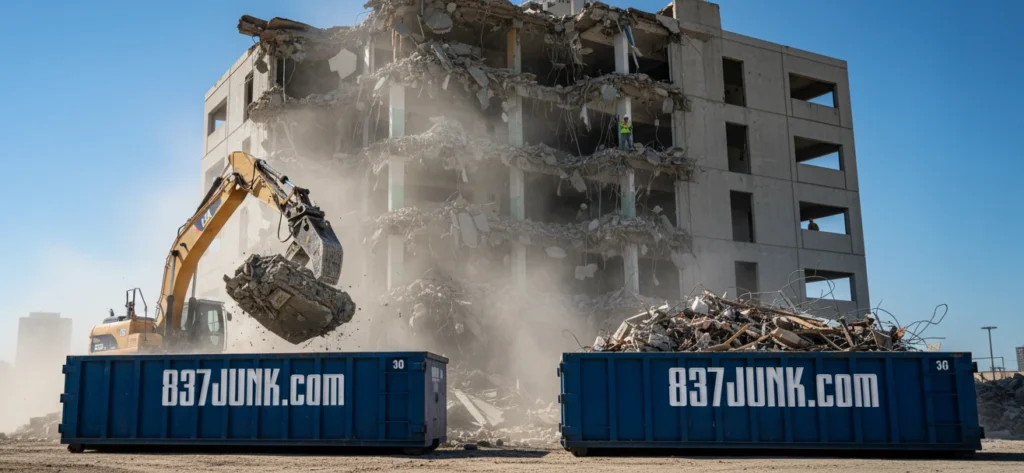
If you're a contractor managing a job site, driveway protection takes on a different scale. You might be cycling through multiple dumpster swaps over the course of a project, which means repeated deliveries and pickups on the same surface.
For contractors and construction projects, here are some additional considerations:
Use thicker plywood or stacked sheets for repeated use. A single 3/4-inch sheet works fine for a one-time residential drop-off, but if a dumpster is being swapped out weekly, consider doubling up the sheets for added protection and longevity.
Mark your placement zone clearly so every delivery driver knows exactly where to drop the container. Consistency in placement protects the same patch of surface every time rather than spreading damage around.
Inspect the plywood after every swap. Plywood that's been compressed repeatedly will start to compress unevenly, which creates a tipping hazard for the container and reduces its protective value.
Consider rubber mats as a supplement to plywood for high-traffic driveway areas. Rubber provides additional grip and cushioning between the plywood and the surface below.
Our construction dumpster rental service is specifically built for contractors who need reliable scheduling, scalable sizes, and communication that keeps projects moving. We serve construction crews across Murphy, Hayesville, Blairsville, Blue Ridge, and surrounding areas with containers ranging from 10 to 40 yards.
What to Do If Your Driveway Gets Scratched Despite Your Best Efforts
Sometimes, despite doing everything right, damage still happens. Maybe the plywood shifted, or the driver had to make a last-second adjustment to clear an obstacle. Here's what to do if you end up with scratches or gouges after a dumpster rental.
Document It Immediately
Take photos of the damage right after pickup while the delivery truck is still on site if possible. Good documentation makes any conversation with the rental company much easier and gives you a clear record for a contractor estimate if you need repairs.
Assess the Severity
Not all scratches are equal. Light surface marks on concrete may just need pressure washing and possibly a concrete sealer to prevent moisture intrusion. Deeper gouges that have removed material need proper patching compound or, in severe cases, section replacement. Resurfacing surface damage on a concrete driveway averages $3 to $7 per square foot in 2026, so knowing the square footage of the affected area helps you budget quickly.
Get a Professional Assessment
For anything beyond cosmetic surface marks, it's worth having a concrete or asphalt contractor take a look before you try to patch it yourself. An improperly patched gouge can become a water infiltration point that causes much larger structural damage over time, especially in climates with freeze-thaw cycles like Western North Carolina and North Georgia.
Conclusion: How to Protect Your Driveway from Roll Off Dumpster Scratches
Knowing how to protect your driveway from roll off dumpster scratches doesn't require expensive equipment or a construction background. Two sheets of 3/4-inch pressure-treated plywood, one at the back door end of the container and one slid into position as the hydraulic lift lowers the front, is all it takes to keep your concrete or asphalt looking the way it did before the dumpster arrived.
Given that a loaded dumpster can weigh up to 20,000 lbs and driveway repairs in 2026 regularly run into the $1,000 to $2,500 range, a $120 plywood investment is one of the easiest decisions you'll make on your project. Handle the prep before delivery day, communicate your plan with the driver, and repeat the same setup on pickup day, and you'll likely never have to deal with dumpster-related driveway damage at all.
We've been helping homeowners, contractors, and business owners across Murphy NC, Hayesville NC, Blairsville GA, Blue Ridge GA, and the surrounding tri-state region handle their waste removal simply and stress-free since 2023. If you're ready to get started on your project, check out our full lineup of roll-off dumpster rental options and get a fast quote today.
Frequently Asked Questions
How do I protect my driveway from roll off dumpster scratches during delivery?
Place a sheet of 3/4-inch plywood at the back end of the dumpster's landing zone before the truck begins unloading, then slide a second sheet into position under the front end as the hydraulic lift lowers the container. This two-sheet method covers both contact points where metal wheels touch your driveway surface and completely eliminates the risk of scratching or gouging during the drop-off process.
Does plywood actually protect your driveway from a heavy dumpster?
Yes, plywood is genuinely effective because it distributes the dumpster's weight across a larger surface area instead of concentrating it on the narrow metal wheel contact points. A 3/4-inch sheet of pressure-treated plywood is thick enough to absorb the compressive load and prevent the wheel edges from digging into or scratching the concrete or asphalt beneath it.
Will a roll off dumpster damage my concrete driveway?
A roll-off dumpster can absolutely damage a concrete driveway without proper protection, since the metal wheels drag and roll across the surface during delivery and pickup under extreme weight loads that far exceed what residential concrete is designed to handle. Using plywood sheets as a landing barrier prevents direct contact between the metal wheels and your concrete, keeping your driveway intact.
Can a roll off dumpster crack or break asphalt?
Yes, and asphalt is actually more vulnerable than concrete in warm weather because the surface can soften enough for metal wheels to sink in and leave permanent impressions or cracks. Using plywood driveway protection is even more critical on asphalt driveways, and scheduling delivery during cooler parts of the day adds an extra layer of protection when temperatures are high.
How thick should the plywood be to protect my driveway from a dumpster?
3/4-inch plywood is the standard recommendation for driveway protection under a roll-off dumpster, and pressure-treated 3/4-inch sheets are the best choice for outdoor use since they resist moisture and warping better than untreated alternatives. Thinner sheets may split or compress under the weight, so don't go below 3/4 inch for this application.
How many sheets of plywood do I need to protect my driveway from a dumpster?
Two standard 4x8 sheets of plywood are enough for most residential and light commercial dumpster rentals, with one sheet positioned at the back door end where the container first touches the ground and the second slid under the front end as the hydraulic lift lowers the container. For larger 30-yard or 40-yard construction containers with a longer footprint, you may want a third sheet for additional coverage in the middle.
Is it worth protecting your driveway from roll off dumpster scratches, or is the damage usually minor?
It is absolutely worth taking the protective steps because driveway repair costs in 2026 range from $1,806 for concrete resurfacing to over $2,465 for asphalt repairs, while two sheets of protective plywood cost around $55 to $65 each, making prevention dramatically cheaper than repair. Even scratches that look minor on the surface can become entry points for water and freeze-thaw damage over time, turning a cosmetic issue into a structural one.